

Key Takeaways
- Industrial buyers complete most of their evaluation online before ever contacting a supplier, so visibility during that research phase is non-negotiable.
- Effective industrial marketing requires a connected system of SEO, technical content, and CRM alignment, not isolated campaigns or tactics.
- Measuring revenue attributed to digital channels, not just traffic or leads, is the only way to know whether your marketing investment is actually working.
For decades, the manufacturing growth engine ran on a familiar formula. Build a solid product, protect your legacy accounts, attend the right trade shows, and let word-of-mouth fill your pipeline.
It worked. Until it didn’t.
Today, industrial leaders across machining, fabrication, engineering, and specialty manufacturing are hitting the same wall. Competitors with less experience but stronger digital visibility are winning bids. The referral ceiling is real, and most manufacturers have already bumped against it.
Industrial marketing has fundamentally shifted. It is no longer a relationship-first, handshake-driven model. It is a digital-first ecosystem where buyers complete most of their research anonymously before they ever contact a supplier and where the companies with the clearest, most visible digital presence consistently win more work.
This guide covers what industrial marketing actually means today, why traditional approaches are losing ground, and exactly what manufacturers need to do to build a system that generates qualified leads month after month.
What Is Industrial Marketing?
Industrial marketing is a specialized form of B2B marketing focused on promoting products, services, and capabilities to other businesses within manufacturing, engineering, and industrial sectors.
Unlike general B2B marketing, it operates in an environment defined by long sales cycles, deeply technical specifications, and purchasing decisions made by multiple stakeholders at once. In practice, it means getting your machining capabilities, fabrication processes, or engineering services in front of the right engineers and procurement managers at exactly the right moment in their buying process.
The complexity is the point. A company selling SaaS software and a company selling precision CNC parts are both doing B2B marketing. However, the research process, the content required, the stakeholders involved, and the sales timeline look entirely different. Industrial marketing is built for that complexity.
How Industrial Marketing Differs from General B2B Marketing
Most B2B marketing assumes a relatively short sales cycle and a small buying team. Industrial marketing does not have that luxury.
A single industrial purchase often involves engineers validating technical specifications, procurement managers vetting supplier reliability, operations teams assessing lead times, and finance approving the contract. Each stakeholder has different questions and different concerns. Your industrial marketing content must speak to all of them without losing any of them.
The sales cycle stretches, too. A manufacturer exploring a new supplier relationship may spend 6 to 18 months in the research phase before issuing a request for a quote. If your digital presence is not visible and useful during that entire window, you won’t be on the shortlist when the decision is made.
Why Traditional Industrial Marketing No Longer Works Alone
Trade shows, referrals, and direct outreach from experienced sales reps built many successful manufacturing businesses. They still carry value, but as standalone strategies, they are no longer enough.
The core problem is that traditional industrial marketing channels are capped by geography, relationships, and timing. A referral only comes when someone in your network happens to know someone who needs what you offer right now. A trade show only reaches the buyers who attend in the years they attend.
Digital channels have no such ceiling.
When a procurement manager at an aerospace OEM types “custom stainless steel tube bending for aerospace applications” into Google at 10pm on a Tuesday, the only companies that appear are the ones that have invested in digital visibility. If you are not there, you do not exist in that buyer’s world.
What Is the Referral Ceiling?
The referral ceiling is the point at which your immediate network is fully tapped. You have worked every warm introduction, you know your local market well, and your existing customers simply do not have additional work to send right now.
This is not a failure. It is a structural limitation of any referral-first strategy. The ceiling exists because your network has a finite size. Growth past it requires reaching buyers you do not know yet, in markets you have not yet penetrated.
That requires a systemic marketing strategy for manufacturers, not just personal outreach. And building that system requires understanding who today’s industrial buyer actually is.
The Rise of Anonymous Research
The shift has been accelerated by how buyers themselves behave. Modern industrial buyers, particularly Millennial and Gen Z professionals who now hold significant influence in engineering and procurement, conduct extensive research before they ever contact a supplier.
According to Gartner, 80% of B2B sales interactions between suppliers and buyers now take place in digital channels. ThomasNet confirms that industrial buyers complete the majority of their technical evaluations anonymously online before filling out a single contact form.
This is the critical word: anonymously. These buyers are on your website, reading your spec sheets, comparing your capabilities against competitors, and building a shortlist without you knowing they are there. If your site does not give them what they need during that phase, they move on quietly, and you never know they were there.
Who Is Actually Doing the Searching Today
Understanding who is searching is just as important as understanding what they are searching for.
Millennial professionals now represent a significant and growing portion of B2B buying committees in manufacturing, engineering, and supply chain roles. Gen Z is entering these roles rapidly. Both demographics are digital natives. They research suppliers the same way they approach any major decision: online, independently, and thoroughly before speaking to a salesperson.
This is not a future trend. It is the current reality inside most industrial organizations today.
Engineering Buyers vs. Procurement Buyers
An effective industrial marketing strategy recognizes that you are rarely selling to just one person. The typical industrial buying committee includes at minimum two very different stakeholders, each with a different agenda.
The Engineer or Technical Specifier wants proof that your process can physically do the job. They search for tolerances, material certifications, CAD models, test data, case studies from comparable applications, and detailed technical specifications. Their primary question is simple: can this supplier actually perform?
The Procurement Manager evaluates your company as a long-term business partner, not just a capable vendor. They want ISO certifications, reliable lead times, supply chain stability, references, and evidence of financial health. Their primary question is equally simple: is this supplier a safe, reliable partner over time?
Your website, your content, and your SEO have to answer both questions clearly and simultaneously. An industrial website that only publishes technical capability pages without addressing operational reliability will lose procurement managers. One that only discusses certifications and capacity without showing technical depth will lose engineers.
Most industrial websites are built for one or the other. The ones that convert buyers consistently speak to both.
Building an Effective Industrial Marketing Strategy
A robust industrial marketing strategy is not a collection of tactics. It is a connected system where each element reinforces the others: your website generates organic traffic, your content converts visitors into known leads, your CRM tracks those leads through a long sales cycle, and your sales team closes them with the context marketing provided.
The foundation of that system has three core components. They are not sequential steps. They work best when built and refined together.

Component 1: A Website Built to Convert Industrial Buyers
Your website is not a digital brochure. Or rather, it should not be. A brochure-style site tells visitors what you do. A conversion-focused industrial website helps buyers determine whether you can solve their specific problem, then makes it easy for them to take the next step.
A solid manufacturing marketing plan starts with the website because every other channel, including SEO, paid search, trade show follow-ups, and email campaigns, ultimately sends traffic back to it. If the site does not convert, nothing else works.
Industrial websites that perform well share consistent characteristics. They load quickly on both desktop and mobile. They also have clear navigation that lets engineers drill straight to technical specifications while giving procurement managers a fast path to certifications, capacity statements, and contact information. Moreover, these websites also use calls to action mapped to specific services rather than a single generic contact form. They also provide high-value downloads, such as capability decks and spec sheets, that give anonymous researchers what they came for.
Investing in website design and development services built specifically for industrial buyers, rather than general B2B web design, produces meaningfully better results because the architecture is designed around how these specific buyers navigate and evaluate suppliers.
Component 2: Specialized Industrial SEO
Search engine optimization for industrial companies operates differently from general SEO. Broad keyword strategies built for consumer brands or software companies do not translate to manufacturing niches.
What works in industrial SEO is specificity. Targeting “metal fabrication” generates traffic, but most of that traffic is not qualified. Targeting “precision sheet metal fabrication for medical device enclosures” generates far less traffic, but nearly everyone who finds that page is a qualified prospect with an immediate and specific need.
Partnering with a professional SEO services provider who understands industrial verticals, including the terminology, the buyer journey, the competitive landscape, and the long sales cycle, helps manufacturers build a pipeline of organic leads. Buyers are actively looking for exactly what you offer. This is the difference between visibility and qualified visibility.
Component 3: Technical Content That Earns Buyer Trust
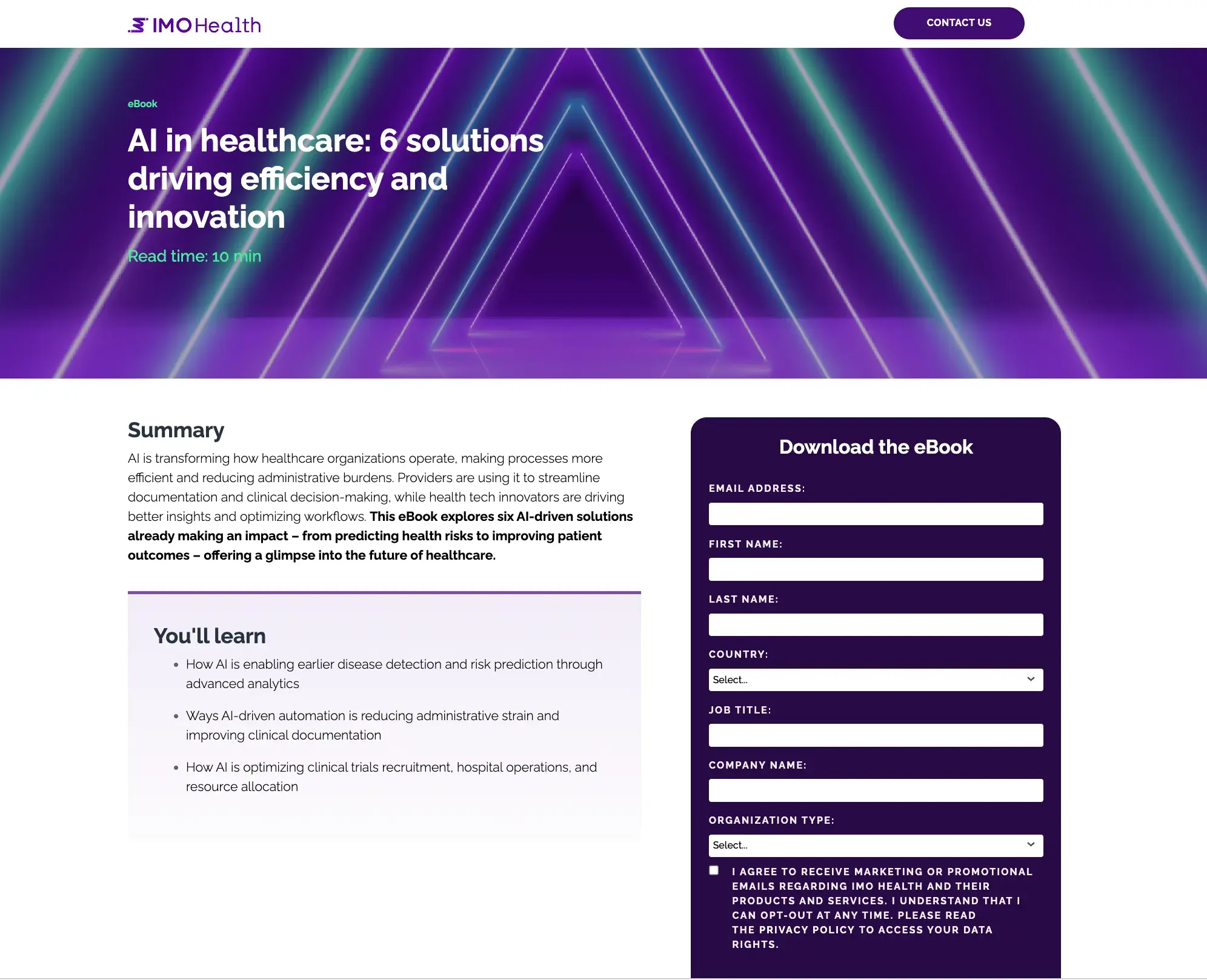
Photo credits: HubSpot
In industrial purchasing, trust is not assumed. It is earned. The primary way a buyer develops trust in a supplier they have never worked with is by evaluating the depth and accuracy of the technical content that supplier publishes.
Generic blog posts about industry trends will not move the needle with engineers. What moves the needle is content that demonstrates real capability: detailed case studies with actual tolerances and measurable outcomes, downloadable CAD models, material certification documents, facility capability decks, and technical white papers that explain your methodology clearly.
This approach directly supports buyer enablement by giving engineers and procurement managers the information they need to internally champion your company well before a formal quote is ever requested. When a buyer can hand their manager a case study showing your tolerance performance on a comparable aerospace application, you have already won half the bid.
Industrial SEO: How to Get Found Before Competitors Do
Search engine optimization is the engine that makes inbound industrial marketing work at scale. It is the difference between waiting for the phone to ring and building a system where qualified buyers find you consistently, every day, without requiring additional ad spend.
What Makes Industrial SEO Different from Traditional SEO
The industrial buying process generates very specific, technical search queries. When a buyer has a real procurement need, they are not searching for “machining company near me.” They are searching for “5-axis CNC machining titanium aerospace components ITAR certified” or “laser cutting stainless steel 316 sheet metal under 0.5 mm.”
These are long-tail queries with low search volume but extremely high purchase intent. A manufacturer that ranks for these specific queries consistently attracts buyers who are at or near the bottom of the funnel and ready to evaluate suppliers.
Broad keyword strategies, by contrast, attract early-stage researchers, students, job seekers, and competitors. Volume without intent is not a pipeline.
How Topic Clusters Build Industrial SEO Authority
Google and other search engines assess a website’s topical authority when deciding where to rank its pages. For a manufacturer specializing in precision CNC machining, this means publishing not just a capabilities page but a cluster of interconnected content around that topic.
That cluster might include blog posts on tolerances, a guide to material selection for different applications, a comparison of machining methods, and case studies from specific industries served. Each piece links to the others and back to the main capabilities page.
This internal linking structure signals topical depth, improves rankings across the cluster, and creates multiple entry points into your digital presence from different search queries at different stages of the buyer journey.
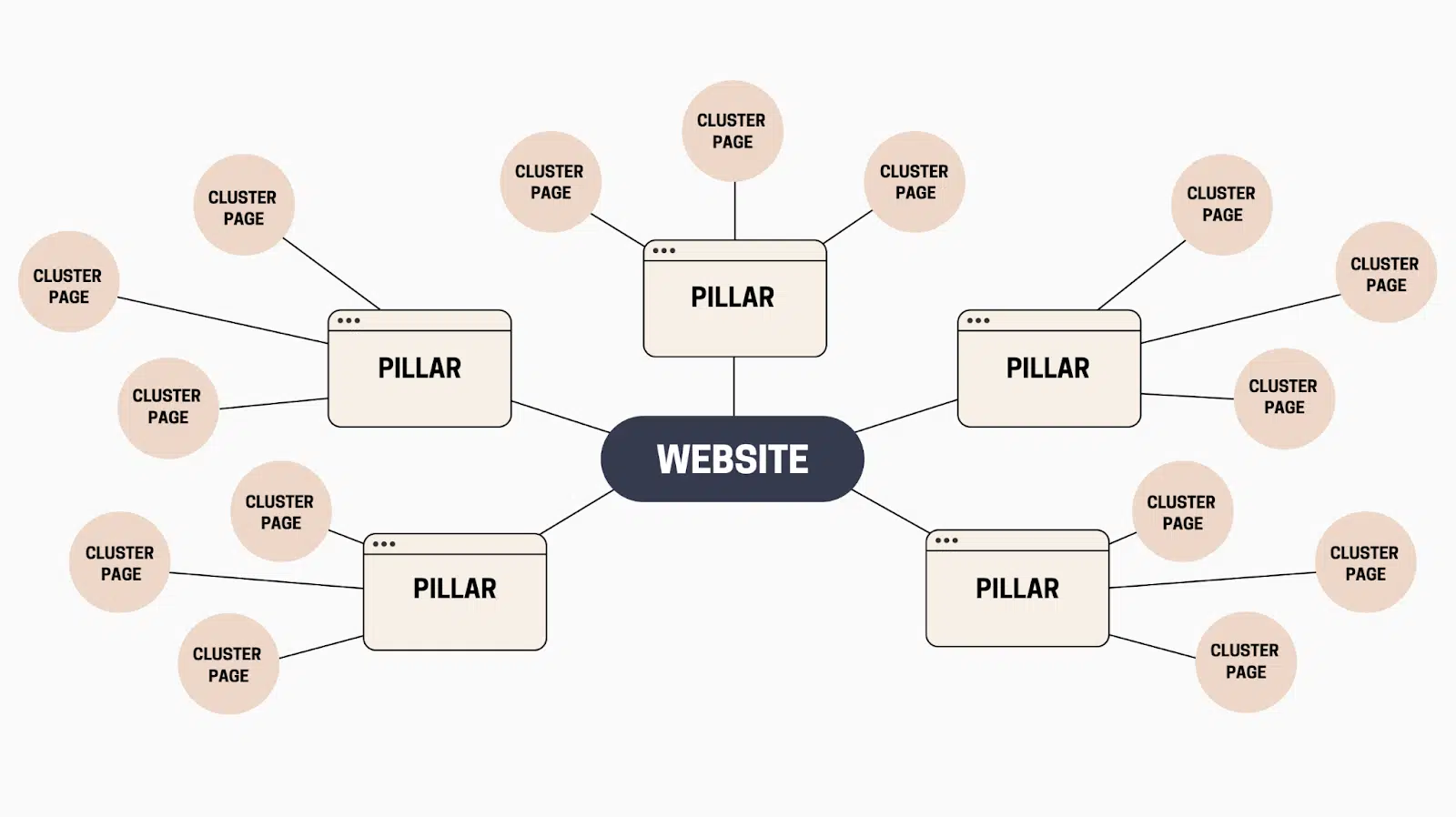
Photo credits: Search Engine Land
Technical SEO Factors Manufacturers Cannot Ignore
Beyond content, industrial websites must address the technical factors that affect how well Google can crawl, understand, and rank your pages.
Page speed impacts both user behavior and rankings. Industrial buyers on desktop and mobile abandon slow pages, and Google uses speed as a direct ranking signal. Heavy image files, unoptimized JavaScript, and outdated hosting infrastructure are common culprits on older industrial websites.
Structured data markup helps search engines and AI systems understand what your content means, not just what it says. Implementing schema types such as Article, FAQPage, HowTo, and Product helps Google accurately categorize your pages and increases eligibility for rich results and AI Overviews.
Crawl accessibility is often overlooked on large manufacturing sites. Key capability pages and technical articles are sometimes inadvertently blocked by robots.txt settings or noindex directives. Regular technical audits catch these issues before they cost you rankings.
XML sitemaps ensure that all critical pages are submitted for indexing. For manufacturers with large product or capability libraries, segmenting sitemaps by content type and keeping them updated accelerates Google’s ability to crawl and rank new content.
Addressing all of these factors at once is a significant lift, especially for in-house teams already stretched across trade show logistics, sales collateral, and day-to-day operations. For instance, at David Taylor Digital, we audit websites for technical errors that quietly suppress rankings, optimize page speed across desktop and mobile, and implement structured data markup. This helps search engines and AI systems correctly categorize content and put it in front of the buyers actively searching for it. Having these technical SEO factors checked will not only help boost your website performance but will also give you an edge against your competitors.
Technical Content Marketing for Industrial Companies
Content marketing in industrial sectors is about depth, not volume. One technically accurate, detailed white paper on a specific process will generate more qualified leads over time than dozens of generic posts about industry trends.
What Types of Content Work Best for Industrial Buyers
The content that consistently performs addresses specific technical problems that buyers are actively trying to solve. The formats that work best include:
- Case studies with real performance data: Show a specific application, the engineering challenge, the process parameters, the materials used, and the measurable outcome. Engineers want to see whether your capabilities transfer to their problem.
- Capability white papers: A detailed explanation of a specific process, technology, or methodology that your facility employs. These build authority and address the “prove it” mindset of technical evaluators who have seen plenty of vague marketing claims.
- Downloadable CAD models and spec sheets: These are among the most accessed assets on industrial websites. A buyer who downloads your CAD model is deeply engaged and almost certainly in an active evaluation process.
- Industry-specific application guides: Rather than explaining what you do generically, explain how your process applies in a specific vertical, such as aerospace, medical device, oil and gas, or defense. This helps buyers immediately identify you as a relevant supplier for their use case.
- Video demonstrations: Short facility walk-throughs and process demonstrations address procurement managers’ need to assess operational capacity and give engineers a visual confirmation of the equipment and process in action.
Using Gated Content to Identify Anonymous Researchers
High-value technical assets can be placed behind a simple form that captures a name, company, and email address. This converts anonymous researchers into known leads.
The goal is not to block access. It is to create a value exchange. Offer something genuinely useful, something that makes the buyer’s evaluation process meaningfully easier, and they will share their contact information willingly.
Gated content is particularly effective at identifying buyers in the early and middle stages of the journey, months before they request a quote. Those leads, properly nurtured through a CRM, become warm opportunities for your sales team when they eventually raise their hand.
Your Industrial Website: The 24/7 Sales Engineer
The website is where every industrial marketing channel converges. Organic SEO traffic, paid search clicks, trade show follow-ups, email campaigns, and referral links all land on your site. What happens next determines whether visitors become leads or bounce.
What High-Converting Industrial Websites Do Differently
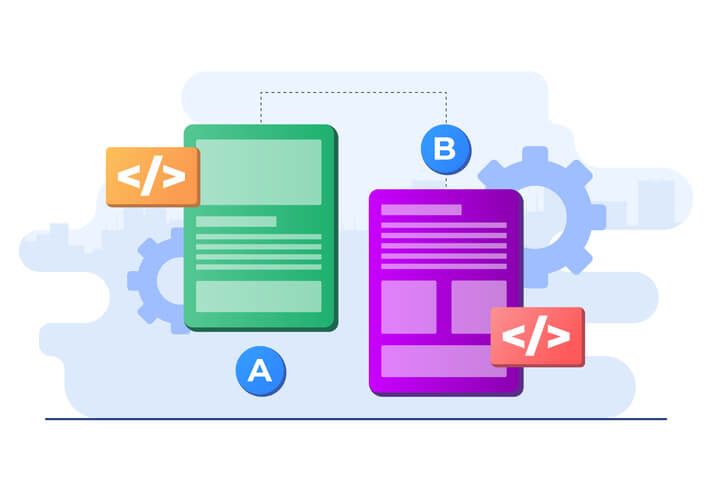
The gap between an industrial website that generates leads and one that does not almost always comes down to three things: clarity, depth, and conversion architecture.
Clarity means a visitor should understand within seconds what you make, who you make it for, and how to go deeper. Vague statements like “precision manufacturing for demanding applications” create friction. Specific statements like “5-axis CNC machining of complex titanium components for aerospace and defense” answer the visitor’s first question immediately and self-qualify the right buyers.
Depth means having enough technical content available that a serious buyer can fully evaluate your capabilities without leaving your site. If an engineer has to send an RFI just to learn your standard tolerance ranges, your site is losing them.
Conversion architecture means placing calls-to-action throughout the user journey that match where each buyer is in their research. A capability page should not just end with a generic contact form. It should offer a specific and relevant next step: “Download the Tolerance Guide,” “Request a Sample Part,” or “Submit Drawings for a Rapid Quote.”
How User Experience Affects Your Rankings
Google uses behavioral signals, including time on page, bounce rate, and interaction patterns, to assess whether a website is genuinely useful to visitors. An industrial website with outdated design, slow load times, or confusing navigation will lose visitors quickly, sending negative signals that reduce your rankings over time.
Performance on Core Web Vitals, Google’s set of user experience metrics, has become an increasingly important ranking factor. Industrial websites, which commonly carry heavy image files and complex navigation structures, frequently underperform here without intentional technical optimization.
A site that looks outdated but ranks well today will lose those rankings gradually as competitors invest in better user experiences. The design of your site and its technical performance are not separate from your SEO. They are part of it.
From Digital Traffic to Closed Revenue
Traffic without conversion is wasted effort. The final link in the industrial marketing chain is ensuring that qualified visitors take a meaningful action that brings them into your sales pipeline.
How to Map CTAs to Buyer Intent
The call-to-action on any given page should match the intent of the buyer who lands on it. A buyer reading a technical capability page is in evaluation mode. They are not ready to commit to a meeting. Offering a specific technical resource, such as a tolerance guide, a material comparison chart, or a case study from a similar application, meets them where they are in the process.
A buyer who has already visited multiple pages, downloaded a spec sheet, and returned to your site a second time is much further along. A CTA offering a quote request or a direct conversation with one of your engineers makes sense at that stage.
Most industrial websites apply a single generic CTA across all pages. That is a missed opportunity. Mapping calls-to-action to specific services and buyer stages can dramatically improve conversion rates without requiring any additional traffic.
Why CRM Alignment Is Non-Negotiable
In industrial sales, the gap between first digital contact and closed contract can span a year or more. During that window, a lot can go wrong in the handoff between marketing and sales.
The solution is CRM alignment. When marketing captures a lead, the CRM should record not just the contact information but also the behavioral history: which pages they visited, which assets they downloaded, which emails they opened, and which search query originally brought them to the site.
When that lead eventually raises their hand, a sales rep equipped with that behavioral context can open the conversation with genuine relevance. Knowing that a prospect spent time on your 5-axis CNC page and downloaded your aerospace case study before calling is not just helpful context. It transforms the opening of the sales conversation and compresses the qualification process significantly.
Building Feedback Loops Between Sales and Marketing
One of the most underused growth levers in industrial companies is the closed-loop feedback between sales and marketing. When sales knows which digital leads became profitable contracts, they can tell marketing to generate more of the same. When marketing knows which campaigns produced the highest-value buyers, they can invest more in those channels and less in the ones that generate volume without quality.
This feedback loop requires shared data: a CRM that both teams access regularly and a shared definition of what qualifies as a good lead. Without it, marketing optimizes for activity metrics and sales ignores digital leads because they do not trust them. With it, both teams move toward the same goal.
How to Measure Industrial Marketing ROI
Measuring the return on industrial marketing investment requires moving past surface-level metrics and focusing on the numbers that connect directly to revenue.
Key Metrics That Actually Matter
Cost per qualified lead (CPQL) normalizes the cost comparison across channels. A trade show that generates 200 badge scans at high cost may produce far fewer qualified leads than a targeted SEO campaign running at a fraction of the price. CPQL makes that comparison honest.
Pipeline velocity tracks how long it takes for a digital lead to progress from first touch to closed contract. Understanding this by channel helps forecast revenue accurately and reveals where leads are stalling in the process.
Revenue attributed to digital channels is the number that justifies the marketing investment to ownership or the executive team. When your CRM tracks the full lead lifecycle, you can calculate the total contract value of deals that originated from organic search, paid media, content downloads, or other digital sources.
Return on ad spend (ROAS) applies specifically to paid search and display campaigns. For manufacturers running paid media alongside organic strategies, ROAS measures the revenue generated per dollar of ad spend and informs budget allocation decisions.
Setting Realistic Timelines for Industrial Marketing Results
Industrial marketing operates on longer timelines than most other B2B sectors. A content and SEO strategy that begins in Q1 may not produce measurable pipeline until Q3 or Q4 as organic rankings build, content accumulates, and the gated lead library grows.
Paid channels can produce faster initial results but require an ongoing budget to sustain. Organic SEO, by contrast, builds compound returns over time. A page that ranks strongly for a high-intent query continues to generate qualified traffic for months or years with minimal ongoing investment.
The most important benchmark is trajectory, not absolute numbers alone. A growing number of qualified leads month over month, even if the numbers are still modest, indicates the system is working. A flat or declining qualified lead count, even with high total traffic, signals that something in the conversion path needs attention.
Navigating Industrial Marketing with the Right Partner
Most in-house manufacturing marketing teams are stretched thin. A single person juggling trade show logistics, sales collateral, website updates, and occasional social media posts does not have the bandwidth or the specialized depth to build and manage a full digital lead generation system.
That is where a specialized partner creates a genuine competitive advantage.
The distinction matters. A generalist digital marketing agency can run paid ads and post social content. But an agency that has worked inside industrial verticals understands the terminology, the buying process, the stakeholder dynamics, and the long timeline involved. They know why an engineer and a procurement manager need entirely different content. They understand why “getting to the first page of Google” for a broad keyword is not the goal. Lastly, they can map a digital strategy to a nine-month sales cycle without losing the thread.
At David Taylor Digital, we work inside industrial verticals because we understand how complex, technical buying processes actually work. We help manufacturers move away from word-of-mouth strategies and build digital ecosystems that align with long sales cycles and consistently produce qualified prospects.
Turn Your Pipeline into a Predictable Growth Engine
Your website should be your best salesperson. David Taylor Digital helps industrial companies build digital systems that generate qualified leads month after month, without relying on trade shows or referrals.
