

Digital advertising demands strategic clarity. Businesses face critical choices between pay-per-click and display advertising channels daily, often without the data-driven framework needed to maximize returns. The difference between optimal channel selection and misaligned spending frequently determines market leadership in today’s competitive landscape. At David Taylor Digital, we’ve guided manufacturing companies through these decisions for over 15 years, watching the digital advertising ecosystem evolve dramatically. This comprehensive analysis breaks down the current state of PPC display ads, providing you with actionable implementation strategies based on industry trends and proven search engine marketing solutions.
Understanding the Fundamental Differences
Before diving into implementation strategies, let’s establish clear definitions of these two distinct advertising approaches:
Pay-Per-Click (PPC) Advertising represents intent-based marketing at its purest. These text ads appear when users actively search for specific terms, primarily on search engines like Google and Bing. The advertiser pays only when someone clicks on their ad, hence the name. PPC thrives on capturing existing demand through strategic keyword targeting.
Display Advertising functions as digital billboards placed strategically across websites, apps, and platforms. These visual ads appear while users consume content elsewhere, introducing your brand to potential customers who weren’t explicitly searching for you. Display ads raise awareness and generate demand rather than capturing existing intent.
This fundamental distinction drives every strategic decision that follows. PPC display ads serve different purposes in your marketing funnel—PPC connects you with people actively searching for solutions like yours, while display advertising builds awareness among people who might need your solution but aren’t actively looking yet.
Here are several significant trends that are currently reshaping both PPC and display advertising landscapes:
AI and Automation Transforming Campaign Management
Both Google and Microsoft have dramatically expanded their AI-powered campaign types. Performance Max campaigns now allow advertisers to run ads across Google’s entire inventory from a single campaign. Similarly, automation has transformed bidding strategies, creative optimization, and audience targeting.
This shift means advertisers spend less time on manual bid adjustments and more time on strategic decisions about messaging and conversion path optimization. The platforms increasingly handle the “how” while advertisers focus on the “what” and “why” of their campaigns.
First-Party Data Becoming the New Currency
With third-party cookies disappearing and privacy regulations tightening, first-party data has become invaluable. Advertisers who collect, organize, and activate their customer data now have a significant competitive advantage in both PPC and display campaigns.
Manufacturing companies with robust CRM systems and customer databases can leverage this data for more precise targeting, especially in display advertising, where audience definition is crucial for effective manufacturing lead generation.
Visual Search Gaining Prominence
Visual search capabilities have expanded dramatically, with Google Lens and similar technologies enabling users to search using images rather than text. This trend particularly impacts display advertising, as visual assets become even more important in the customer journey.
For manufacturing companies, this means product imagery and visual demonstrations are increasingly valuable assets in your advertising arsenal.
Connected TV and Audio Expanding Display Options
The definition of “display advertising” continues to expand beyond traditional banner ads. Connected TV (CTV) advertising and programmatic audio ads now represent significant opportunities within the broader display category.
These channels offer new ways to reach decision-makers in environments where traditional digital marketing for manufacturers might not penetrate.
PPC vs. Display: When to Prioritize?
With these trends in mind, how should businesses strategically implement PPC and display advertising? The answer lies in understanding the unique strengths of each channel and aligning them with specific business objectives.
PPC Advertising
PPC advertising should take priority when your business objectives include:
- Capturing Existing Demand: When potential customers are actively searching for your products or services, PPC ensures you’re visible at this critical decision point. For manufacturing companies, this often means targeting specific product categories, technical specifications, or industry-specific terminology.
- Driving Immediate Conversions: PPC typically delivers faster conversion results than display advertising because it targets users who are already in an active buying mindset. When quarterly goals need immediate attention, PPC typically delivers quicker returns.
- Testing Messaging and Offers: The immediate feedback loop of PPC makes it ideal for testing different value propositions, offers, and messaging approaches. The data gathered can then inform broader digital marketing campaigns.
- Targeting Specific Purchase Intent: For manufacturing companies selling specialized equipment or services, PPC excels at connecting with the small but valuable audience actively seeking those specific solutions.
Display Advertising
Display advertising becomes the preferred channel when your objectives include:
- Building Brand Awareness: Display advertising excels at introducing your brand to potential customers who aren’t yet searching for your specific solutions. For manufacturing companies entering new markets or launching new product categories, display builds the awareness that later drives search activity.
- Nurturing Consideration: Display remarketing keeps your brand visible throughout lengthy B2B buying cycles typical in manufacturing. By staying present as prospects research and evaluate options, you maintain mind share during extended decision processes.
- Expanding Market Reach: Display advertising can reach potential customers who may benefit from your solutions but don’t know to search for them. This is particularly valuable for innovative products or services that solve problems customers don’t realize can be addressed.
- Visual Demonstration: For manufacturing companies whose products benefit from visual explanation, display formats provide the canvas to showcase equipment, processes, or results in ways text ads cannot.
4 Strategies to Try that Integrate PPC and Display Advertising
The most effective digital advertising strategies integrate both PPC and display advertising in complementary ways. Here’s how to build this integrated approach:
Full-Funnel Mapping
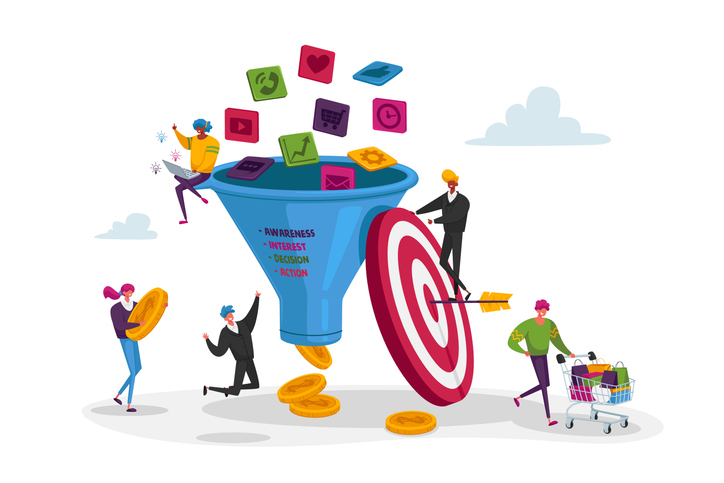
Start by mapping your complete customer journey from awareness through consideration to decision. Then align specific ad formats and channels to each stage:
- Awareness Stage: Broad-reach display advertising, YouTube video ads, and social media display formats introduce your brand to potential customers.
- Consideration Stage: Remarketing display ads, more specific display targeting, and broader PPC keywords keep your brand present as prospects research solutions.
- Decision Stage: Highly specific PPC keywords, remarketing with specific offers, and conversion-focused display ads capture prospects ready to take action.
Cross-Channel Audience Sharing
Use audience data gathered from one channel to inform targeting in another. Users who clicked on PPC ads but didn’t convert become prime targets for display remarketing.
Conversely, users who engaged with display ads can be targeted with specific PPC campaigns as they move toward active search behavior. Website visitors from organic traffic can be segmented by behavior and targeted with relevant display ads to nurture their interest.
Consistent Messaging With Channel-Appropriate Execution
Maintain consistent core messaging across channels while adapting execution to the strengths of each format. Your fundamental value proposition should remain consistent whether in a text-based PPC ad or a visual display ad.
However, PPC ads should emphasize specificity and direct response elements, while display ads should leverage visual storytelling and brand reinforcement.
Attribution Modeling Beyond Last-Click
Implement attribution modeling that acknowledges the complementary roles of different channels. Last-click attribution typically overvalues PPC while undervaluing display’s contribution to the customer journey. Position-based models (giving weight to first touch, last touch, and key mid-funnel interactions) or data-driven attribution provide more balanced views of channel effectiveness.
Budget Allocation Framework

One of the most challenging aspects of implementing this strategy is determining appropriate budget allocation between PPC and display advertising. Consider these factors:
Business Maturity Stage
Newer businesses or those entering new markets typically benefit from higher display advertising allocation to build initial awareness. Established businesses with strong brand recognition often see better returns from heavier PPC investment to capture existing demand.
Sales Cycle Length
Longer sales cycles, common in manufacturing and B2B contexts, generally require greater investment in display advertising to maintain presence throughout extended consideration phases. Shorter sales cycles may justify heavier PPC investment to capture ready-to-buy customers.
Competitive Landscape
In highly competitive PPC environments with expensive keywords, shifting budget toward strategic display advertising can create competitive advantage through upper-funnel influence. In less saturated markets, aggressive PPC spending may efficiently capture available demand before competitors.
Seasonal Factors
During peak demand seasons, increase PPC budgets to capture heightened search activity. During slower periods, shift toward display to build a pipeline for future peak seasons.
Implementation Roadmap
To implement this strategic approach effectively, follow this structured roadmap:
Phase 1: Foundation Building (Months 1-2)
Implement robust tracking and analytics infrastructure across all digital properties. Establish baseline PPC campaigns targeting high-intent, bottom-funnel keywords. Deploy initial remarketing display campaigns to capture and nurture website visitors. Develop clear testing hypotheses for both channels.
Phase 2: Expansion and Learning (Months 3-4)
Expand PPC keyword coverage to include mid-funnel consideration terms. Launch prospecting display campaigns targeting look-alike audiences based on existing customers. Begin cross-channel audience sharing between PPC and display. Implement initial attribution modeling beyond last-click.
Phase 3: Optimization and Integration (Months 5-6)
Refine audience targeting based on performance data from both channels. Optimize budget allocation based on attribution insights. Implement advanced testing of messaging consistency across channels. Develop channel-specific creative that maintains brand consistency while leveraging format strengths.
Phase 4: Scaling and Sophistication (Months 7-12)
Expand into additional ad formats within each channel (responsive display ads, dynamic search ads, etc.). Implement more sophisticated audience segmentation and personalization. Develop programmatic direct relationships for premium display inventory relevant to your industry. Refine attribution models based on accumulated data.
Measuring Success Beyond Channel Metrics
The true measure of successful implementation isn’t channel-specific metrics but business outcomes. While channel metrics provide operational insights, focus on these higher-level indicators:
Customer Acquisition Cost (CAC) across all digital channels combined, rather than siloed by channel. Time to Conversion from first touch to closed business, and how different channel combinations affect this timeline. Customer Lifetime Value (CLV) segmented by acquisition channel combinations to identify which channel pairings deliver the most valuable customers. Market Share Growth relative to digital advertising investment, measuring broader business impact beyond immediate conversion metrics.
Conclusion
The strategic implementation of PPC and display ads isn’t about choosing one channel over the other but orchestrating their complementary strengths. By aligning these channels with specific business objectives and customer journey stages, manufacturing companies can build comprehensive SEM services programs that deliver measurable business growth.
The most successful digital advertising strategies recognize that PPC excels at capturing existing demand, while display advertising creates new demand. Together, they form a complete system for sustainable business growth.
As you implement this framework, remember that digital advertising effectiveness comes not from platform-specific tactics but from the strategic alignment of these tools with your fundamental business objectives. By maintaining this business-first perspective while implementing the technical details outlined above, you’ll build a digital advertising program that drives meaningful results in today’s complex marketplace.
Key Takeaways:
- PPC ads capture existing demand through search intent, while display ads create new demand through visual awareness.
- An integrated approach using both PPC and display ads creates a full-funnel strategy that supports customers throughout their buying journey.
- Effective budget allocation between PPC and display ads should consider business maturity, sales cycle length, and competitive landscape.
Ready to Optimize Your Digital Advertising Strategy?
Our team of experts can help you implement the perfect mix of PPC and display advertising tailored to your manufacturing business objectives.
