

Customer experience now drives 80% of B2B purchase decisions, not price.
That single statistic changes everything for manufacturing companies. While you’ve spent decades perfecting production processes and quality control, your website might be systematically destroying sales opportunities before prospects ever contact your sales team.
The numbers behind this transformation tell a complete story.
Manufacturing buyers have fundamentally changed how they research and evaluate suppliers. They expect the same intuitive, fast, and informative digital experiences they get from consumer sites. When your website fails to deliver that experience, prospects move on to competitors who understand this new reality.
The Hidden Cost of Poor UI UX for B2B
Most manufacturing websites were built with an outdated assumption. Decision makers would tolerate clunky interfaces, slow loading times, and confusing navigation because B2B purchases are rational, not emotional.
That assumption costs companies millions in lost revenue.
User interface design can boost website conversion rates by 200%. An intuitive user experience can enhance conversion rates by 400%. These improvements directly translate to more qualified leads, shorter sales cycles, and higher close rates.
But here’s what makes B2B design particularly challenging.
According to Gartner, the typical B2B customer is actually a group of six to 10 people who all gather information independently. Your website must serve multiple stakeholders simultaneously. The plant manager needs technical specifications. The procurement director wants pricing frameworks. The CEO requires ROI justification.
Traditional B2B websites fail because they try to be everything to everyone, creating confusing experiences that serve no one effectively.
How Consumer Experience Standards Transformed B2B Buyer Expectations?
The generational shift in B2B buying behavior creates new design requirements.
Millennials now represent more than 50% of B2B buyers, and 44% of millennial buyers are sole decision makers. These professionals grew up with Amazon, Netflix, and smartphone apps. They instinctively expect interfaces that work intuitively without training or explanation.
When they encounter a manufacturing website with poor navigation, slow loading times, or unclear information architecture, they experience genuine friction. That friction translates directly into lost business opportunities.
The shift goes beyond generational preferences.
Business buyers spend significant time on consumer e-commerce sites for personal purchases. They experience seamless product configuration, instant pricing, detailed specifications, and one-click ordering. When they research industrial equipment or manufacturing services, they expect similar functionality and ease of use.
Companies that ignore this expectation lose competitive advantage regardless of their product quality or service capabilities.
7 Best Practices for UI UX for B2B That Drive Conversions
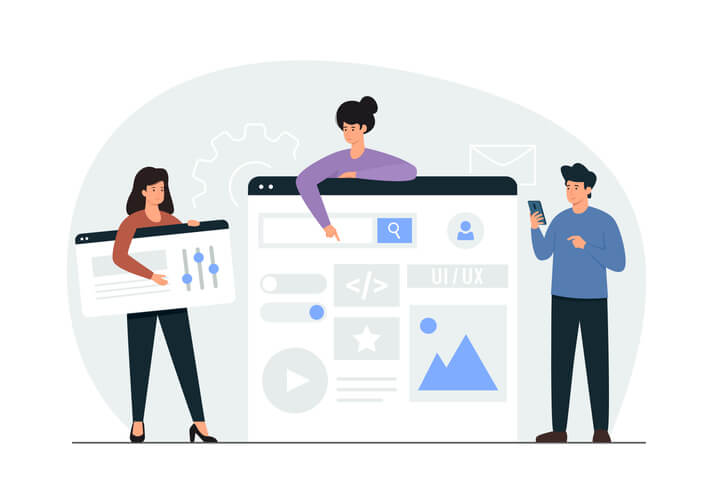
1. Design for Multiple Stakeholder Journeys
Create distinct pathways for different user types without forcing everyone through the same funnel. Use clear navigation labels that match how different stakeholders think about their roles. “Technical Specifications” for engineers. “ROI Calculator” for financial decision makers. “Implementation Timeline” for project managers.
Provide filtering and search functionality that lets each stakeholder quickly find relevant information without scrolling through irrelevant content.
2. Optimize Page Loading Speed
B2B sites loading in one second convert three times better than those loading in five seconds. Manufacturing websites often include high-resolution product images, detailed technical drawings, and comprehensive specification sheets. These assets create value but can destroy loading performance if not properly optimized.
Implement lazy loading for images below the fold. Compress all visual assets without sacrificing quality. Use content delivery networks to serve files from geographically relevant servers.
Test loading speed regularly using tools like Google PageSpeed Insights. Treat loading time as a key performance indicator, not a secondary consideration.
3. Simplify Complex Information Architecture
Manufacturing companies typically offer multiple product lines, serve various industries, and provide different service levels. This complexity often creates website navigation that mirrors internal organizational structure rather than customer mental models.
Organize information based on customer problems, not internal departments.
Instead of “Products > Industrial Equipment > Mixing Systems > Stainless Steel > Pharmaceutical Applications,” use “Pharmaceutical Manufacturing > Mixing Solutions > Stainless Steel Options.”
Create clear visual hierarchies that guide users toward conversion actions without overwhelming them with choices.
4. Implement Progressive Information Disclosure
B2B buyers need detailed information, but they don’t need everything simultaneously.
Use expandable sections, tabbed interfaces, and layered content to provide comprehensive information without creating visual overwhelm. Let users choose their level of detail based on their specific needs and stage in the buying process.
Provide summary information upfront with options to dive deeper. This approach serves both quick evaluators and thorough researchers effectively.
5. Design a Mobile-First Website
Manufacturing buyers often research suppliers while traveling, attending trade shows, or working in field locations. Your website must deliver full functionality on mobile devices, not just basic information. This includes technical specification access, pricing tools, contact forms, and document downloads.
Test all conversion paths on mobile devices regularly. Ensure forms work properly with mobile keyboards and touch interfaces.
6. Create Clear Value Proposition Statements
Manufacturing buyers evaluate multiple suppliers simultaneously. Your value proposition must be immediately clear and differentiated. Use specific, measurable language instead of generic marketing claims. “Reduces production downtime by 23% compared to standard solutions” beats “industry-leading reliability.”
Position your value proposition prominently on every major landing page. Don’t make prospects hunt for reasons to choose your company.
7. Build Trust Through Social Proof and Transparency
B2B manufacturing purchases often involve significant financial commitments and operational risk. Display customer testimonials, case studies, and industry certifications prominently. Include specific results and measurable outcomes when possible.
Provide clear contact information, physical addresses, and team member profiles. Manufacturing buyers want to know they’re working with established, reliable partners. Use security badges, industry association memberships, and quality certifications to demonstrate credibility without requiring extensive explanation.
How Should Manufacturing Companies Implement UI UX Improvements?
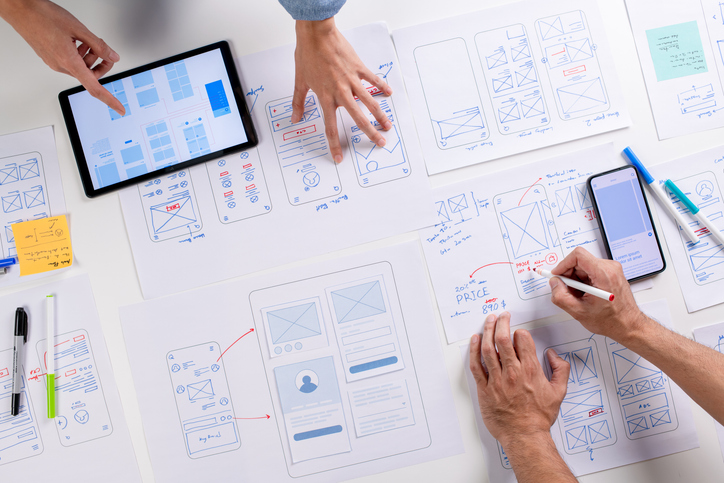
Start with a comprehensive audit of your current website performance.
Analyze user behavior data to identify where prospects drop off during the research process. Use heat mapping tools to understand how visitors interact with your content. Survey existing customers about their initial website experience and what information proved most valuable.
Focus on high-impact improvements first.
Page loading speed and mobile optimization typically provide the fastest ROI improvements. These changes require technical implementation but don’t require extensive content strategy or design revision.
Plan content improvements systematically, considering custom website development needs for complex manufacturing requirements.
Map out the different stakeholder types involved in your typical sales process. Identify the specific information each stakeholder needs and when they need it. Create content pathways that serve each group effectively without creating confusion for others.
Test changes incrementally and measure results consistently.
Conversion optimization services for B2B require patience because sales cycles are longer than consumer purchases. Track leading indicators like time on site, pages per session, and contact form completions alongside ultimate conversion metrics.
The Competitive Advantage of B2B Design
Manufacturing companies that invest in UI UX for B2B gain sustainable competitive advantages through effective B2B website design.
Superior website experiences reduce the cost of customer acquisition by improving organic conversion rates. They shorten sales cycles by providing prospects with information they need for decision-making. They increase customer lifetime value by creating positive initial impressions that carry through the entire business relationship.
Most importantly, excellent B2B design becomes increasingly difficult for competitors to replicate quickly. While competitors can match your pricing or copy your product features, creating genuinely superior user experiences requires sustained investment in understanding customer needs, iterative design improvement, and ongoing optimization based on real user behavior. This is particularly crucial for manufacturing web design projects.
The manufacturing companies that recognize this opportunity now will capture disproportionate market share as buyer expectations continue evolving toward consumer-grade digital experiences.
Your website either accelerates sales conversations or creates barriers that send prospects to competitors. The choice is entirely within your control.
Key Takeaways
- Customer experience drives 80% of B2B purchase decisions, making UI/UX design critical for manufacturing companies seeking to convert website visitors into qualified leads.
- B2B websites must serve multiple stakeholders simultaneously while maintaining consumer-grade usability standards that modern buyers expect from their digital experiences.
- Superior B2B design creates sustainable competitive advantages by reducing customer acquisition costs, shortening sales cycles, and increasing conversion rates by up to 400%.
Ready to Transform Your B2B Website Performance?
Don’t let poor UI UX design cost you qualified leads and sales opportunities. Our team specializes in creating high-converting B2B websites that serve multiple stakeholders effectively.
